
LawyersAgent ONE
PalmAgentFinance
4.137.00 Reviews
- Version
- 4.8.5.1.5
- Installs
- 10.00K
- Age Rating
- Everyone
Screenshots

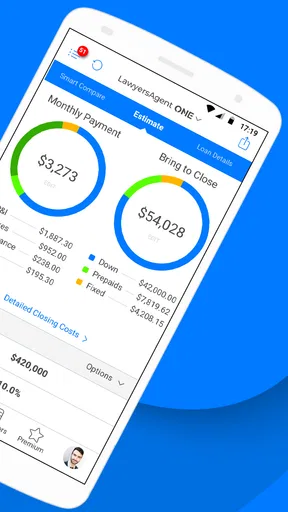
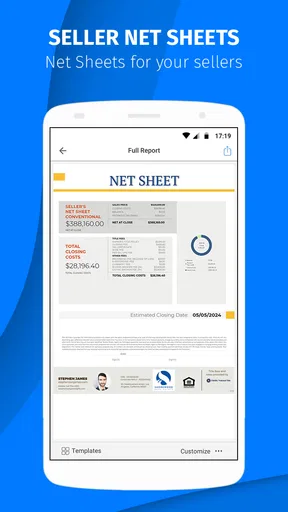


Our Review of LawyersAgent ONE
 Analysis by Appyee
Choosing a finance app for real estate work is different from choosing a general budgeting tool. I look for something that fits the pace of property professionals: quick access during a call, a focused purpose, and enough practical value to justify adding another app to an already busy workflow. LawyersAgent ONE is aimed directly at that audience. It is a free finance app from PalmAgent, and its focus on real estate professionals makes it more specialized than the usual personal money manager.
My first impression is that this is not an app I would recommend simply because it is free. I would recommend it when the user’s daily work genuinely overlaps with the legal and transaction side of real estate. That distinction matters. Someone looking for household budgeting, investment tracking, or a broad accounting package will probably feel more at home with a conventional finance alternative. A real estate professional who wants a dedicated companion, however, has a clearer reason to test it.
How I Decided Whether It Was Worth Using
I judged LawyersAgent ONE by four practical questions. Does it belong in a real estate professional’s normal workday? Is it easier to reach for than a collection of unrelated tools? Does its focused design save mental effort? And is the trade-off acceptable for someone who needs a complete business system rather than a specialist app?
Those questions are more useful than looking only at its average rating. The app holds a 4.1 average from around 86 ratings, which suggests a generally positive reception without making it seem universally perfect. Its audience is also fairly specific: the listing shows over 10,000 installs, so I see it as a targeted professional tool rather than a mass-market finance application.
The age rating is Everyone, which makes the app approachable from a content perspective. That does not automatically make it suitable for every user, though. The important filter is professional relevance. If your work involves real estate transactions and the legal details around them, the app’s purpose is immediately understandable. If you are a casual buyer, a tenant, or someone managing personal finances, the fit is much weaker.
The current version is 4.8.5.1.5, and the minimum operating-system requirement is Android 7.0. That gives it a reasonably broad Android reach, especially for people who keep an older work phone. I still advise checking the device before making it part of a time-sensitive workflow, because compatibility is only one part of reliability. A professional app should also be tested in the exact situations where you expect to use it.
The right decision criteria for a real estate professional
For me, the strongest reason to consider this app is specialization. A generic finance app may be polished, but it usually asks the user to translate real estate work into categories designed for personal spending or broad business accounting. That translation creates friction. A specialist tool starts from a different assumption: the user’s concerns are connected to property professionals and legal processes.
That focus can be valuable when you are moving between meetings, calls, documents, and property-related tasks. Instead of forcing every situation into a general-purpose financial structure, a dedicated app may feel more natural because its subject matter is closer to the work itself. I would not measure that benefit only in seconds saved. The bigger advantage is reducing the number of decisions you have to make about where a piece of information belongs.
Another decision criterion is how the app fits with existing habits. I would not replace a firm’s established accounting, document-management, or transaction platform without a careful trial. LawyersAgent ONE makes more sense as a focused mobile layer than as an automatic replacement for every system a real estate office already uses. That is an important distinction for teams: a useful companion can be valuable even when it is not the central database.
I also consider the cost of experimentation. The app itself is free, which lowers the barrier to trying it. There are in-app purchases ranging from $0.99 to $9.99 per item, so I would review any optional purchase before treating the app as a permanent business expense. The sensible approach is to begin with a real work scenario, not a casual installation, and decide whether the paid elements offer enough value for your particular role.
Where the focused approach works best
The app’s clearest strength is that it speaks to a narrow professional context. That is useful for an agent, coordinator, or other property specialist who does not want a general finance screen filled with unrelated personal-finance concepts. A focused app can make it easier to keep work information mentally separate from grocery budgets, bank accounts, subscriptions, and other household concerns.
Here is the kind of everyday situation in which I would test it. Imagine I am moving between a property viewing and a conversation about a transaction. I need a mobile reference point that belongs to my professional work rather than my personal money management. I open LawyersAgent ONE for that work context, use it alongside my normal communication and document tools, and then return to the office system when the task needs a full record. The value is not that one app magically handles the entire transaction. The value is having a purpose-built stop between a conversation and the more formal workflow.
That workflow also reveals a useful tip: decide in advance what the app is responsible for and what remains in the firm’s main system. If you treat it as a complete replacement without confirming that it covers every required step, you may create duplicate records or leave important information in the wrong place. If you treat it as a specialist aid with a defined boundary, it is easier to judge fairly.
A second non-obvious benefit is role clarity. Real estate work often involves people with different responsibilities, and a general finance application can blur those boundaries. A tool designed around the legal-agent side of the profession encourages me to ask a practical question before using it: is this information useful for my professional decision, or does it belong in another system? That habit can be more valuable than simply having another place to store information.
A third useful insight is that a focused application may be most helpful during transitions, not during long desk sessions. At a desk, I can use a full browser-based platform or office software with a larger screen and broader controls. On the move, I need a smaller, more direct tool. LawyersAgent ONE is easier to justify when mobile access is part of the job and when the user wants professional context available without opening a general office suite.
What I would check before relying on it
I would not make any specialist app the sole source of truth on the first day. My trial would start with a low-risk task that resembles normal work but does not depend on an irreversible decision. I would check how naturally it fits beside the tools I already use, whether the information is easy to locate later, and whether switching between the app and other work systems feels manageable.
I would also test the app at the point where confusion is most likely: after a busy meeting, when several properties or clients are competing for attention. An app can appear clear during a calm setup session and still feel awkward when used under pressure. This is why I prefer a short, realistic trial over judging it from the store summary alone.
Another practical consideration is device age. Android 7.0 support is helpful for users with older phones, but older hardware can still affect the overall experience. I would check responsiveness, screen readability, and how comfortably the app can be used one-handed. Those details matter more in a car park, hallway, or property visit than they do at a desk.
Because the app contains optional purchases, I would also make a simple cost rule for a team. Free access is enough to evaluate the workflow. Only after identifying a repeated task that the optional purchase improves would I consider spending money. This prevents a common mistake: paying for an extra before knowing whether the underlying app actually fits the office’s process.
Where Alternatives May Fit Better
LawyersAgent ONE is not automatically the best choice just because it has a real estate focus. A general accounting application may be better for someone who needs income, expenses, invoices, and reports in one broad financial picture. A transaction-management platform may be preferable for a team that needs shared records, formal stages, and office-wide visibility. A document or note application may be enough for a professional whose main need is quick reference rather than specialized finance support.
I would choose a general alternative when my work crosses several industries or when personal and business finances must be viewed together. The advantage there is breadth. Instead of maintaining a specialist app beside other tools, I can keep a wider financial overview in one place. The compromise is that the real estate context may feel less direct, and I may spend more time adapting generic categories to property work.
I would choose a transaction-focused alternative when collaboration is the priority. If several people need to see the same status, update the same record, and follow a consistent office procedure, a dedicated team platform may offer a better foundation. LawyersAgent ONE can still be useful as a personal mobile companion, but I would not assume that a specialist app automatically replaces a shared operational system.
I would choose a document-centered alternative when my day is mostly about reading, annotating, and retrieving files. In that situation, the question is not whether the app is relevant to real estate, but whether it handles the work I actually perform most often. A professional label should not distract me from the concrete task I need to complete.
This is the main trade-off: specialization can remove irrelevant choices, but it can also narrow the app’s usefulness. I like a focused tool when it solves a recurring professional problem. I move toward a broader alternative when I need reporting, collaboration, or a complete record across many kinds of work. Neither approach is universally superior.
The switching cost is more than the download
Moving to LawyersAgent ONE, even as a companion app, has a cost that is easy to underestimate. The first cost is attention. I need to remember which information belongs here and which belongs in my existing system. The second is consistency. If I use the app only occasionally, I may forget the workflow and return to old habits. The third is duplication: entering the same detail in two places can cancel out the convenience of mobile access.
To reduce that friction, I would assign the app one clearly defined job. For example, I might use it for a specific professional reference task while keeping official records elsewhere. I would avoid creating a second informal archive unless I had a clear reason to do so. This single-boundary approach makes it easier to evaluate whether the app is saving effort or merely moving it around.
For a solo professional, the switching cost is mostly personal organization. For a small office, it becomes a training issue. Everyone needs the same understanding of what the app is for, especially if optional purchases are involved. A free download can still create operational complexity if each person uses it differently.
There is also a psychological switching cost. Once I become comfortable with a broad finance app, a specialist tool may initially feel limited simply because it does fewer unrelated things. That is not necessarily a defect. The right comparison is not “which app has more screens?” but “which app makes my most important real estate task easier?” If the answer is not clear, I would stay with the established alternative.
Who should try it, and who should skip it
I would recommend a trial to real estate professionals who want a dedicated mobile finance tool with a legal-agent orientation. It is particularly worth considering for people who regularly work away from a desk and want their professional context separated from personal budgeting apps. The free entry point makes that trial practical, while the Everyone rating keeps the app broadly approachable.
I would be more cautious if I needed a complete financial command center. Users expecting advanced accounting, comprehensive reporting, or a full team workflow should compare it with broader professional systems before changing their routine. The app’s narrow purpose is its appeal, but that same narrowness can become a limitation when the job expands beyond its intended context.
I would also skip it if I am not involved in real estate work. The store summary is direct about its audience, and I see no reason for a personal-finance user to add a specialist tool simply because it is free. For household budgets, savings goals, or everyday spending, another category of app will likely be clearer and more useful.
One final tip is to judge it by repetition. If the app helps with a task I perform once a month, the benefit may be modest. If it supports a task that appears throughout the working week, even a small reduction in friction can justify keeping it. That is the right way to interpret a focused product: not as a universal replacement, but as a tool whose value grows when its intended job repeats.
My recommendation after weighing the trade-offs
I see LawyersAgent ONE as a sensible specialist companion for the right real estate professional, not as a universal finance solution. PalmAgent has positioned it for a defined audience, and that focus gives it a clearer identity than a generic money app. Its free price makes testing straightforward, although the optional purchases mean I would still make a deliberate decision before expanding its role.
The app is worth trying if you want mobile access to a professional real estate context, prefer a focused tool over a crowded general-purpose dashboard, and are willing to define exactly where it fits in your workflow. Start with one realistic task, use it alongside—not instead of—your established system, and watch for duplicate work. That test will tell you more than the rating alone.
My recommendation is therefore conditional but positive: try it when specialization is the problem you need to solve. If your real need is broad accounting, team collaboration, or personal budgeting, choose an alternative built around that job. If your daily work is tied to real estate and you want a dedicated mobile aid, LawyersAgent ONE deserves a place on your shortlist. I would keep it only if it makes a repeated professional task feel more organized, more direct, and easier to handle away from the desk.
Verdict
Strengths of LawyersAgent ONE
- Quick access to legal professionals through a dedicated mobile platform.
- Useful for organizing lawyer searches and comparing available services.
- Convenient communication tools can reduce the need for in-person visits.
- May help users find specialized legal assistance for specific case types.
- Accessible from anywhere, making legal support easier to reach while traveling.
Limitations of LawyersAgent ONE
- Availability and response times may vary by location and lawyer participation.
- Some legal consultations or features may require additional payment.
- The app may not replace detailed, in-person advice for complex cases.
- Users should verify each lawyer’s credentials and experience independently.
- Sensitive case information requires careful review of the app’s privacy policies.
Other Releases by PalmAgent
View All
FidelityAgent ONE
Finance4.2

TicorAgent ONE
Finance4.4

PalmAgent ONE
Finance3.4

ChicagoAgent ONE
Finance4.2
Similar Picks in This Category
View All
Google Wallet
Google LLC4.3

Airtel: Recharge, Bank & Loans
Airtel4.0

PayPal - Pay, Send, Save
PayPal Mobile4.2

DANA Indonesia Digital Wallet
PT Espay Debit Indonesia Koe4.5

Binance: Buy Bitcoin & Crypto
Binance Inc.4.8

Cash App
Block, Inc.4.7
Frequently Asked Questions
What is LawyersAgent ONE and who is it designed for?
LawyersAgent ONE is a legal practice management application designed to help lawyers, law firms, and legal professionals organize their daily work in one place. Depending on the available version and subscription, it may support client management, case organization, document handling, calendars, tasks, communication, and administrative workflows. It is intended for professional use rather than for people seeking general legal advice or representation.
What features can I expect from LawyersAgent ONE?
The app is intended to centralize important legal-work activities, making it easier to keep track of clients, matters, deadlines, appointments, documents, and assigned tasks. Some versions may also include collaboration tools, notifications, billing-related functions, or integrations with other services. The exact feature set can vary according to the platform, account type, region, and subscription plan, so users should verify the current listing before downloading.
Is LawyersAgent ONE suitable for managing confidential client information?
Because legal professionals often work with highly sensitive information, privacy and security should be considered before entering client data into LawyersAgent ONE. Review the developer’s privacy policy, terms of service, data-storage practices, access controls, and available security options. Avoid uploading confidential documents until you understand how information is protected, where it may be stored, and whether your firm’s compliance requirements are fully supported.
Does LawyersAgent ONE require an account or paid subscription?
Users may need to create an account before accessing the main functions of LawyersAgent ONE, particularly if the app is connected to a firm or professional workspace. Availability of features may depend on a free trial, paid plan, organization invitation, or separate service agreement. Check the current Google Play or App Store information for pricing, trial conditions, in-app purchases, renewal terms, and cancellation instructions.
Can LawyersAgent ONE replace a lawyer, legal research, or professional advice?
No. LawyersAgent ONE should be viewed as a productivity and practice-management tool, not as a substitute for a qualified lawyer, legal research, court procedures, or professional judgment. The app may help organize information and workflows, but users remain responsible for checking deadlines, verifying legal content, protecting client confidentiality, and complying with applicable regulations. Always confirm important legal decisions through appropriate professional sources.
